



“All experience shows that even smaller technological changes than those now in the cards profoundly transform political and social relationships. Experience also shows that these transformations are not a priori predictable and that most contemporary “first guesses” concerning them are wrong.” – John von Neumann
Is the coronavirus crisis political or technological? All present analysis would seem to say that this pandemic was a result of gross political incompetence, lack of preparedness and impulsive responses by world leaders and government. But this view would be narrow because it would privilege the proximate cause over the ultimate one. The true, deep cause underlying the pandemic is technological. The coronavirus arose as a result of a hyperconnected world that made human reaction times much slower than global communication and the transport of physical goods and people across international borders. For all our skill in creating these technologies, we did not equip ourselves to manage the network effects and sudden failures in social, economic and political systems created by them. An even older technology, the transfer of genetic information between disparate species, was what enabled the whole crisis in the first place.
This privileging of political forces over technological ones is typical of the mistakes that we often make in seeking the root cause of problems. Political causes, greatly amplified by the twenty-four hour news cycle and social media, are illusory and may even be important in the short-term, but there is little doubt that the slow but sure grind of technological change that penetrates deeper and deeper into social and individual choices will be responsible for most of the important transformations we face during our lifetimes and beyond. On scales of a hundred to five hundred years, there is little doubt that science and technology rather than any political or social event cause the biggest changes in the fortunes of nations and individuals: as Richard Feynman once put it, a hundred years from now, the American Civil War would pale into provincial insignificance compared to that other development from the 1860s – the crafting of the basic equations of electromagnetism by James Clerk Maxwell. The former led to a new social contract for the United States; the latter underpins all of modern civilization – including politics, war and peace.
The question, therefore, is not whether we can survive this or that political party or president. The question is, can we survive technology? In 1955, John von Neumann wrote a very thought-provoking article titled “Can We Survive Technology?” in Fortune magazine that put this question in the context of the technology of the times. The essay was influenced by historical context – a great, terrible world war had ended just ten years earlier- and by von Neumann’s own background and interests. But the essay also presents original and very general observations that are most interesting to analyze in the context of our present times. By then Johnny, as friends and even casual acquaintances called him, was already regarded as the fastest and most wide-ranging thinker alive and had already carved his name in history as a mathematician, polymath, physicist and military advisor of the very highest rank. Sadly, he was only two years away from the cancer that would kill him at the young age of 54. He was also blessed – or cursed – with a remarkably prescient but still cheerful and ironic pessimism that enabled him to boldly look ahead into future world events; already in the 1930s, he had predicted the major determinants of a potential world war and the winners and losers. Along with his seminal contributions to game theory, pure and applied mathematics, nuclear weapons design and quantum mechanics, his work on computing and automata had already placed him in the front ranks of soothsayers. And like all good soothsayers, he was sometimes wrong.
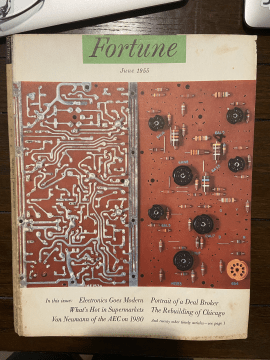
Perhaps it’s pertinent to quote a paragraph from the last part of Johnny’s article because it lays bare the central thesis of his philosophy in stark terms.
“All experience shows that even smaller technological changes than those now in the cards profoundly transform political and social relationships. Experience also shows that these transformations are not a priori predictable and that most contemporary “first guesses” concerning them are wrong. For all these reasons, one should take neither present difficulties nor presently proposed reforms too seriously.”
Von Neumann starts by pointing to what he saw as the major challenge to the growing technological revolution of the past half century, a technological revolution that saw the rise of radio, television, aviation, submarines, antibiotics, radar and nuclear weapons among other things. He had already seen what military technology could do to millions of people, incinerating them in a heartbeat and reducing their cities and fields to rubble, so one needs to understand his musings in this context.
“In the first half of this century the accelerating industrial revolution encountered an absolute limitation—not on technological progress as such but on an essential safety factor. This safety factor, which had permitted the industrial revolution to roll on from the mid-eighteenth to the early twentieth century, was essentially a matter of geographical and political Lebensraum: an ever broader geographical scope for technological activities, combined with an ever-broader political integration of the world. Within this expanding framework it was possible to accommodate the major tensions created by technological progress. Now this safety mechanism is being sharply inhibited; literally and figuratively, we are running out of room. At long last, we begin to feel the effects of the finite, actual size of the earth in a critical way.”
Let’s contrast this scenario with the last fifty years which were also a period of extraordinary technological development, mainly in communications technologies and the nature of work and knowledge engendered by the Internet. As Johnny notes, just like in 1955 we are “running out of room” and feeling the effects of the “finite, actual size of the earth in a critical way”, albeit through our own novel incarnations. The Internet has suddenly brought people together and made the sphere of interaction crowded. We were naïve in thinking that this intimacy would engender understanding and empathy; but as we realized quite quickly, it tore us apart instead by cloistering us into our own echo chambers that we hermetically sealed from others through social disapproval and technological means. But as Johnny rightly notes, this crisis is scarcely a result of the specific technology involved; rather, “it is inherent in technology’s relation to geography on the one hand and to political organization on the other.”

The three major technological developments of Johnny’s time were computing, energy production and the weather. That last topic might seem like an odd addition, but it was foremost on Johnny’s mind as a major topic of application for computing. Climate was of special interest to him because it was characteristic of complex systems including non-linear differential equations and multifactorial events that are very hard for human beings to solve using pencil and paper. Scientists during World War 2 had also become finely attuned to the need for understanding the weather; this need had become apparent during major events like the invasion of Normandy where the lives of hundreds of thousands of soldiers and civilians depended on day-to-day weather forecasts. It was precisely for understanding complex systems like the weather that Johnny and his associates had made such major contributions to building some of the first general-purpose computers employing the stored program concept, first at the University of Pennsylvania and then at the Institute for Advanced Study in Princeton.
Johnny had a major interest in predicting the weather and then controlling it. He was also one of the first scientists to see that increased production of carbon dioxide would have major effects on the climate. He was well aware of the nature of feedback systems and analyzed, among other things, the impact of solar radiation and ice changes on the earth’s surface. He understood that both these factors are subject to delicate balances, and that human production of carbon dioxide might well upset or override these balances. But Johnny’s main interest was not simply in understanding the weather but in predicting it. In his essay he talks about cloud seeding and rain making and about modulating the reflectivity of ice to increase or decrease temperatures. He clearly understands the monumental impact, exceeding the effects of even nuclear war, that weather prediction and control might have on human civilization:
“There is no need to detail what such things would mean to agriculture or, indeed, to all phases of human, animal, and plant ecology. What power over our environment, over all nature, is implied! Such actions would be more directly and truly worldwide than recent or, presumably, future wars, or than the economy at any time. Extensive human intervention would deeply affect the atmosphere’s general circulation, which depends on the earth’s rotation and intensive solar heating of the tropics. Measures in the arctic may control the weather in temperate regions, or measures in one temperate region critically affect another, one quarter around the globe. All this will merge each nation’s affairs with those of every other, more thoroughly than the threat of a nuclear or any other war may already have done.”
Of all the topics that Johnny discusses, this is the only one which at first sight does not seem to have come to pass in terms of major developments. The reasons are twofold. Firstly, Johnny did not know about chaos in dynamical systems which would make the accurate prediction of climate very difficult. Of course, you don’t always need to understand a system well in order to manipulate it by trial and error. This is where the second reason involving political and social will comes into play. Johnny’s prediction that carbon dioxide will have a major impact on the climate has been well-validated, although the precise effects remain murky. World opinion in general has shied away from climate control experiments, but given the potentially catastrophic effects that CO2 might have on the food supply, immigration, tree cover and biodiversity in general, it is likely that the governments of the world would be pressed into action by their citizens to at least try to mitigate the impact of climate change using technology. Although this prediction by Johnny now seems quaint and outdated, my feeling is that his analysis was actually so far ahead of its time that we will soon see it discussed, debated and put into action, perhaps even during my lifetime. In saying this I remember President Kennedy’s words: “Our problems are man-made; therefore, they can be solved by man.”
Like many scientists of his time, Johnny was optimistic about nuclear power, seeing limitless possibilities for it, perhaps even making it “too cheap to meter”. His prediction seems to have failed along with similar predictions by others, but the failure has less to do with the intrinsic nature of nuclear power and more with the social and political structures that hampered its development by imposing onerous regulatory burdens on nuclear plant construction, spreading unrealistic fears about radiation and not allowing entrepreneurs to experiment with reactor designs through trial and error, the way they did with biotechnology and computing. Just like with weather prediction, I believe that Johnny’s vision for the future of nuclear power will become reality once world governments and their citizenry realize that nuclear power would provide one of the best ways to escape the dual trap of low-energy alternative fuels and high-energy but politically and environmentally destructive fossil fuels. Already we are seeing a resurgence of new-generation nuclear reactors.
One of the fears that Johnny had about nuclear power was that our reaction times would be inadequate compared to even minor developments in the field. He says,
“Today there is every reason to fear that even minor inventions and feints in the field of nuclear weapons can be decisive in less time than would be required to devise specific countermeasures. Soon existing nations will be as unstable in war as a nation the size of Manhattan Island would have been in a contest fought with the weapons of 1900.”
I already mentioned at the beginning how the rapid advances in communications and transport systems made us woefully prepared for the coronavirus. But there is another very important sphere of human activity perhaps unanticipated by Johnny that has also left us impoverished in terms of countermeasures against even minor “improvements”. This sphere is the field of electronic commerce and financial trading, where differences of nanoseconds in the transmission of price signals can make or break the fortunes of companies. More importantly, they can make or break the fortunes of millions of ancillary economic units and individuals who are associated with these institutions through a complex web of models and dependencies whose fault lines we barely understand, leading to a gulf of ignorance with direct causal connections to the global financial crisis of 2008. Sadly, there is no evidence that we understand these dependencies any better now or are better prepared for employing countermeasures against odd and sundry developments in the layering and modeling of financial instruments impacting millions.
Cybersecurity is another field where even minor improvements in being able to control, even momentarily, the complex computer network of an enemy country can have network effects that surpass the initial perturbation and lead to large-scale population impact. Ironically, the very dependence of developed countries on state-of-the-art computer networks which govern the daily lives of their citizens has made them vulnerable to attacks; the creation of these techno-bureaucratic systems itself has not kept pace with the capacity of the systems to efficiently and globally ward off foreign and domestic attacks. Presumably, defense and high-value corporate systems in countries like the United States are resilient enough to not be crippled by such attacks, but as the 2016 election showed, there is a low level of confidence that this is actually the case. Moreover, these systems need to be not just resilient but antifragile so that they can counteract the vastly amplified effects of small initial jolts with maximum efficiency. As critical medical, transport and financial infrastructure increasingly ties its fate to such technology, the ability to respond with countermeasures in equal or less time compared to the threat becomes key.
Automation is another field in which Johnny made major contributions through computing. While working on the atomic bomb at Los Alamos, he had observed human “computers” performing repetitive calculations related to the complex hydrodynamics, radiation flow and materials behavior in a nuclear weapon as it blew apart in a millionth of a second. It was apparent to him that not only would computers revolutionize this process of repetitive calculation, but that they would have to employ stored programs if they were not to be crippled in these calculations by the bottleneck of being reconfigured for every task.
“Thanks to simplified forms of automatic or semi-automatic control, the efficiency of some important branches of industry has increased considerably during recent decades. It is therefore to be expected that the considerably elaborated newer forms, now becoming increasingly available, will effect much more along these lines. Fundamentally, improvements in control are really improvements in communicating information within an organization or mechanism. The sum total of improvements in this field is explosive.”
The explosive nature of the improvements in automation again comes from great gains in economies of scale combined with the non-linear effects of chunking together automated protocols that lead to a critical mass in terms of suddenly freeing up large parts of engineering and commercial processes from human intervention. Strangely, Johnny did not see the seismic effects automation would have on displacing human labor and causing significant political shifts both within and across nations. In looking for insights into this problem, perhaps we should look to a book written by Johnny’s friend and contemporary, mathematician Norbert Wiener of MIT. In 1950 Wiener had written a book titled “The Human Use of Human Beings” in which he extolled automation but warned against machines breaking free from the dictates of their human masters and controlling us instead.
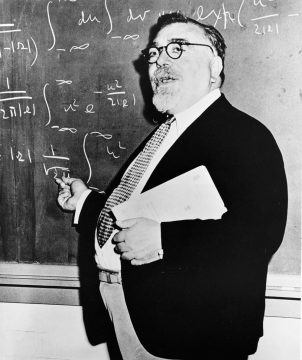
Wiener’s prediction has already come true, but likely not in the way he meant or foresaw. Self-replicating pieces of code now travel through cyberspace looking for patterns in human behavior which they reinforce through modifying and spreading themselves through the cyber-human interface. There is no better example of this influence than in the ubiquity of social media and the virtual addiction that most of us display for these sources. In this particular case, the self-replicating pieces of code first observe and then hijack the stimulus-response networks in our brains by looking for dopamine rush-inducing reactions and then mutating and fine-tuning themselves to maximize such reactions (the colloquial phrase “maximizing clicks”, while pithy, does not begin to capture such multilayered phenomena).
How do we ward off such behavior-hijacking technology, and more generally technology with destructive effects? Here Johnny is pessimistic, for several reasons. The primary reason is because as history shows, separating “good” from “bad” technology is often a fool’s errand at best. Johnny gives the example of classified military technology which is often impossible to separate from open civilian technology because of its dual use nature. “Technology – like science – is neutral all through, providing only means of control applicable to any purpose, indifferent to all…A separation into useful and harmful subjects in any technological sphere would probably diffuse into nothing in a decade.” Any number of examples ranging from chemistry developed for both fertilizer and explosives to atomic fission developed for both weapons and reactors should underscore the unvarnished and total truth of this statement.
Technology and more fundamentally science are indeed indifferent, mainly because, in Robert Oppenheimer’s words, “The deep things in science are not discovered because they are useful; they are discovered because it was possible to discover them.” Once prehistoric man found a flint rock, rubbing it together to create fire and using it to smash open the skull of a competitor were both inevitable actions, completely inseparable from each other. It was only our unnatural state of civilization, developed during an eye blink of time as far as geological and biological evolution are concerned, that taught man to try to use the rock for the former purpose instead of the latter. These teachings came from social and political structures that men and women built to ensure harmony, but there was exactly zero information in the basic technology of the rock itself that would have allowed us to make the distinction. As Johnny notes, achieving a strict separation of this distinction could only come from obliteration of the technology in the first place, providing a neat example of having to kill something in order to save it.
However, the bigger and deeper problem that Johnny identified is that technology has an inexorable, Faustian attraction that creates an unholy meld between its utility and volatility. This is because:
“Whatever one feels inclined to do, one decisive trait must be considered: the very techniques that create the dangers and the instabilities are in themselves useful, or closely related to the useful. In fact, the more useful they could be, the more unstabilizing their effects can also be. It is not a particular perverse destructiveness of one particular invention that creates danger. Technological power, technological efficiency as such, is an ambivalent achievement. Its danger is intrinsic… The crisis will not be resolved by inhibiting this or that apparently particularly obnoxious form of technology”
“The more useful they could be, the more unstabilizing their effects can also be.” This statement perfectly captures the Gordian knot technologies like social media have bound us with today. Their usefulness is intrinsically linked to the instability they cause, whether that instability involves an addictive hollowing out of our personal time or the political echo chambers and biases that evolve with these platforms. As such technology is indeed ambivalent, and perhaps the people who would thrive best in an exceedingly technological world are ones who can comfortably ride the wave of this ambivalence while at least marginally pushing it in a productive direction. Neither can people harbor the seemingly fond hope that, even from a strictly political and social viewpoint, the demonstration of a technology such as a social media platform as toxic and divisive would lead to its decline. When even war which clearly demonstrated the ability of technology to obliterate millions could do little to stem further technological development in weaponry, it is scarcely possible to believe that the peacetime problems created by Facebook or Twitter would do anything to starve off what fundamentally makes them tick. And yet, similar to what happened with weaponry, there might be a path forward where we make these destructive technologies more humane and more conditional, with a curious mix of centralized and citizen-enabled control that curb their worst excesses.
Quite apart from the emotional and technical aspects of it, separating useful effects of technology from destructive ones and trying to isolate one from the other might also be a moral mistake. This becomes apparent when one realizes that almost all of technology with its roots in science comes from the basic human urge to seek, discover, build, find and share; the word technology itself comes from the Greek ‘techne’, meaning the skill or manner in which something is gained, and ‘logos’, meaning the words through which such knowledge is expressed. Opposing this urge would be opposing a very basic human facility.
“I believe, most importantly, prohibition of technology (invention and development, which are hardly separable from underlying scientific inquiry), is contrary to the whole ethos of the industrial age. It is irreconcilable with a major mode of intellectuality as our age understands it. It is hard to imagine such a restraint successfully imposed in our civilization.”
What safeguards remain then against the rapid progression and unpredictable nature of technologies described above? As mundane as it sounds, course-correction through small, incremental, opportunistic steps might be the only productive path. Just like the infinitesimal steps of thermodynamic work in an idealized Carnot engine, one hopes that small course-corrective steps will allow us to gradually turn the system back to an equilibrium state. As Johnny put it, “Under present conditions, it is unreasonable to expect a novel cure-all.”

I think back again to Johnny’s central thesis stated at the beginning of this essay – “All experience shows that even smaller technological changes than those now in the cards profoundly transform political and social relationships” – and I think of Eli Whitney’s cotton gin. By the end of the 18th century it was thought by many that slavery was a dying institution; the efficiency of slaves picking cotton was so low that one could scarcely imagine slavery serving as the foundation of the American economy. Whitney’s cotton gin, invented in 1794, changed all that: while previously it took a single slave about ten hours to separate and clean a single pound of cotton, two or three slaves using the machine could turn out fifty pounds of cleaned cotton in a day. Whitney’s invention was classic dual use: it would lead to transformative gains in the production of a staple crop. But it was other human beings, not the machine, that decided that these gains would be built on the backs of indentured human beings often treated worse than animals. The cotton gin consigned America to be an economic powerhouse and a fair share of America’s population to not being treated even as citizens. Clearly the reaction time built into the social institutions of the time could not keep pace with the creation of a seemingly mundane brush-like component that would separate cotton fibers from each other.
What can we do in the face of such inevitable, unpredictable technological progression that catches us off guard? If the answer were really simple, we would have discovered it with the metronomic timing of new invented technology. But Johnny’s musings end with hope, hope provided by the same history that tells us that stopping technology is tantamount to trying to stop the air from flowing.
“Can we produce the required adjustments with the necessary speed? The most hopeful answer is that the human species has been subjected to similar tests before and seems to have a congenital ability to come through, after varying amounts of trouble. To ask in advance for a complete recipe would be unreasonable. We can specify only the human qualities required: patience, flexibility, intelligence.”
From limiting the spread of nuclear weapons to reducing human discrimination and trafficking to curbing the worst of greenhouse gas emissions and deforestation, while technology has shown nothing but a ceaseless march into the future, shared morality has been a powerful if sporadic driving force for resurrecting the better angels of our nature against our worst instincts. The social institutions supporting slavery did not reform until a cruel and widespread war forced their hand. But I wonder about counterfactual history. I wonder if, as gains in agricultural production kept on increasing, first with other mechanical harvesters and beasts of burden and then finally with powerful electric implements, whether the reliance on humans as a source of indentured labor would have been weakened and finally done away with by the moral zeitgeist. The great irony here would have been that the injustice one machine (the cotton gin) created might have met its end at the hands of another (the cotton mill created by mass electrification). This counterfactual imagining of history would nonetheless be consistent with the relentless progress of technology that has indeed made life easier and brought dignity to billions whose existence previously was mired in poverty and bondage. Sometimes the existence of something is more important than all the reasons you can think of for justifying its existence. We can continue to hope that the human race will continue to progress as it has before; with patience, flexibility, intelligence.
