A beautifully written account of mathematics lost and found. The author got "estranged" from mathematics in school and now, at the age of 65 and after a distinguished writing career, has taken it upon himself to learn the fundamentals of algebra, geometry and calculus. The book is by turns funny and sad even as Wilkinson recounts his struggling attempts to master material that would be child's play for many bright teenagers. He is helped in his efforts by his niece Amie Wilkinson, an accomplished mathematician at the University of Chicago. I myself could empathize with the author since I too had an estrangement of sorts with the subject in high school because of a cruel, vindictive teacher, and it took me until college when, thanks to brilliant and empathetic teachers, I clawed myself back up to start appreciating it.
But while he may struggle even with high school mathematical skills (and he I share a particular loathing for word problems), Wilkinson brings a poetic, philosophical sensibility acquired through a long career to bear on the topic that no young 15-year-old whippersnapper genius in math could commit to paper. He ruminates on the platonic beauty of math and wonders whether and how some people's minds might be wired differently for it. He does not always understand how his brilliant mathematical niece Amie always "gets it" and she in turn doesn't always understand why her uncle has trouble with ideas that are second nature to her.
Often quoting from eloquent mathematicians and physicists like Bertrand Russell, G. H. Hardy and Roger Penrose, Wilkinson brings a fresh, beautiful perspective to the utility and beauty of mathematics; to the struggle inherent in mastering it and the rewards that await those who persevere. I would highly recommend the book to those who may have lost faith in mathematics in high school and want to pick up some of the concepts later, or even to young students of math who may be wizards at solving equations but who might want to acquire a broader, more philosophical perspective on this purest of human endeavors.
There's a rather strange article by Temple Grandin in the Atlantic, parts of which had me vigorously nodding my head and parts of which had my eyebrows crawling straight up. It's a critique of how our school system tries a one-size-fits-all approach that does a lot of students disservice, but more specifically takes aim at algebra.
First, let me say how much I admire Temple Grandin. A remarkable woman who had severe autism for most of her childhood (there's a very good profile of her in Oliver Sacks's "An Anthropologist On Mars"), she rose above her circumstances and channeled her unusual abilities into empathy for animals, becoming one of the world's leading experts in the design of humane housing and conditions for livestock. She has without a doubt demonstrated the value of what we can call 'non-standard' modes of thinking, teaching and learning that utilize visual and tactile ability. So she starts off strong enough here:
As a professor of animal science, I have ample opportunity to observe how young people emerge from our education system into further study and the work world. As a visual thinker who has autism, I often think about how education fails to meet the needs of our very diverse minds. We are shunting students into a one-size-fits-all curriculum instead of nurturing the budding builders, engineers, and inventors that our country needs.
So far so good. In fact let me digress a bit here. When I was in high school I was very good at geometry but terrible at algebra; I still remember this one midterm where I got an A and in fact the highest points-based grade in the class in geometry but almost flunked algebra. It took me a long time to claw back to a position where algebra made sense to me. In fact this appreciation of visual explanations was what drew me in part to chemistry, so I perfectly appreciate what Grandin is saying about being sympathetic to students who might have more of a visual capacity.
But further down the pages she takes a detour into the evils of algebra that doesn't make sense to me. Again, some of what she says is spot on; for instance the fact that algebra (and math in general) can be taught much better if you can relate it to the real world. Too often it's presented simply as abstraction and symbol manipulation. But then there's this:
Cognitive skills may simply not be developed enough to handle abstract reasoning before late adolescence, which suggests that, at the very least, we’re teaching algebra too early and too fast. But abstract reasoning is also developed through experience, which is a good argument for keeping all those extracurriculars.
This part may make more of a case for tying algebra to specific real-world applications than doing away with the abstractions per se. The fact of the matter is that math is abstract; in fact it's precisely this abstraction that makes it a powerful general tool. And there are good and bad ways of teaching that abstraction, but the solution isn't to get rid of it or delay it. In fact, that kind of thinking feeds into the popular belief seen in some quarters these days that algebra and calculus both need to be optional classes.
It's when she gets to the end of the piece, however, that Grandin completely loses me:
"No two people have the same intelligence, not even identical twins. And yet we persist in testing—and teaching—people in the same way. We don’t need Americans to be better at algebra, per se. We need future generations that can build and repair infrastructure, overhaul energy and agriculture, develop robotics and AI. We need kids who grow up with the imagination to invent the solutions to pandemics and climate change. When school fails them, it fails all of us."
Say what? Building and repairing infrastructure, overhauling energy and agriculture and - especially - developing robotics and AI do not need algebra? In fact most of these professions involve a very solid grounding in abstract aspects of algebra and calculus. I think Grandin is treading very handily from saying that algebra should be taught better to saying that we should get rid of it or make it optional. Two very different things.
My concern based on this article and others I am reading these days is that, in our drive to reform the system, we want to consider it unnecessary. That is a grave mistake. Algebra and calculus and for that matter music and art are things that, even beyond the practical utility of the first two, help us appreciate our place in society and the cosmos better and in general teach us to be more human. Make them better we certainly should, but let's not burn the building down in our zeal.
Two men walking in Princeton, New Jersey on a stuffy day. One shaggy-looking with unkempt hair, avuncular, wearing a hat and suspenders, looking like an old farmer. The other an elfin man, trim, owl-like, also wearing a fedora and a slim white suit, looking like a banker. The elfin man and the shaggy man used to make their way home from work every day. Passersby and motorists would strain their heads to look. Everyone knew who the shaggy man was; almost nobody knew who his elfin companion was. And yet when asked, the shaggy man would say that his own work no longer meant much to him, and the only reason he came to work was to have the privilege of walking home with the elfin man. The shaggy man was Albert Einstein. His walking companion was Kurt Gödel.
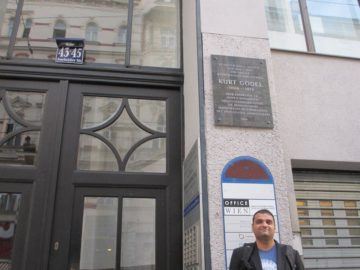
What made Gödel, a figure unknown to the public, so revered among his colleagues? The superlatives kept coming. Einstein called him the greatest logician since Aristotle. The legendary mathematician John von Neumann who was his colleague argued for his extraction from fascism-riddled Europe, writing a letter to the director of his institute saying that “Gödel is absolutely irreplaceable; he is the only mathematician about whom I dare make this assertion.” And when I made a pilgrimage to Gödel’s house during a trip to his native Vienna a few years ago, the plaque in front of the house made his claim to posterity clear: “In this house lived from 1930-1937, the great mathematician and logician Kurt Gödel. Here he discovered his famous incompleteness theorem, the most significant mathematical discovery of the twentieth century.”
The author in front of the house in Vienna where Gödel was living with his mother and brother when he proved his Incompleteness Theorems
The reason Gödel drew gasps of awe from colleagues as brilliant as Einstein and von Neumann was because he revealed a seismic fissure in the foundations of that most perfect, rational and crystal-clear of all creations – mathematics. Of all the fields of human inquiry, mathematics is considered the most exact. Unlike politics or economics, or even the more quantifiable disciplines of chemistry and physics, every question in mathematics has a definite yes or no answer. The answer to a question such as whether there is an infinitude of prime numbers leaves absolutely no room for ambiguity or error – it’s a simple yes or no (yes in this case). Not surprisingly, mathematicians around the beginning of the 20th century started thinking that every mathematical question that can be posed should have a definite yes or no answer. In addition, no mathematical question should have both answers. The first requirement was called completeness, the second one was called consistency.
The overarching goal of mathematics was to prove completeness and consistency starting from a fundamental, minimal set of axioms, much like Euclid had built up the grand structure of plane geometry starting with a handful of axioms in his marvelous ‘Elements’.
Mathematicians had good reasons to be optimistic. The 19th century had perhaps been the most important for the development of the discipline, solidifying results in analysis, geometry and other key mathematical domains. The mathematical giants of that time, textbooks names like Gauss, Dedekind, Cantor and Riemann, had put mathematics on a solid foundation. It was against this background that Bertrand Russell and Alfred North Whitehead wrote their magnum opus, the dense ‘Principia Mathematica’ that sought to put mathematics on a solid foundation of logic. Unnecessary axioms of mathematics would be discarded, the superstructure trimmed, and mathematics would be put on a sound basis of symbolic logic. One of the major goals of their work was to resolve any paradoxes in mathematics that would lead to statements akin to the famous Liar’s Paradox – “I am lying” that are false when they are true and true when they are false. Russell and Whitehead thought that paradoxes were merely a consequence of not clarifying the axioms and the deductions from them well enough.
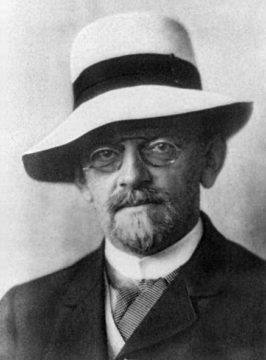
David Hilbert, perhaps the leading mathematician of the early 20th century
The intellectual godfather of the mathematicians was David Hilbert, perhaps the leading mathematician of the first few decades of the twentieth century. In a famous 1900 address at the International Congress of Mathematics in Paris, Hilbert set out 23 open problems in mathematics that he hoped would engage the brightest minds of the next few decades; it is a measure of Hilbert’s perspicacity in picking these problems that some of them are still unsolved and pursued. The second among these problems was to prove the consistency of arithmetic using the kind of axiomatic approach developed by Russell and Whitehead. Hilbert was confident that within a few decades at best, every question in mathematics would have a definite answer that could be built up from the axioms. He famously proclaimed that there would be no ‘ignorabimus’ (a statement whose truth or falsity could never be known) in mathematics. Mathematicians soon began to make themselves busy in carrying out Hilbert’s program.
When Hilbert gave his talk, Kurt Gödel was still six years away from being born. Thirty years later he would drive a wrecking ball into Hilbert’s dream, showing that even this most exact, pristine of all human intellectual endeavors contained truths that are fundamentally undecidable. And he did it in such a final manner that there could be no debate about it. That is what left brilliant men like Einstein and von Neumann with their mouths agape.
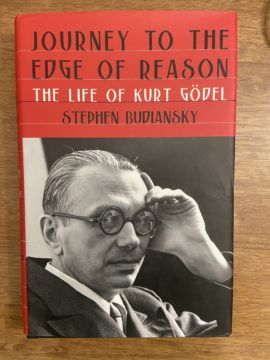
Now we have a biography of Gödel and his times written by veteran science and history writer Stephen Budiansky that is the most evocative and comprehensive biography of the logician written so far for a general audience. The book is really about Gödel and his times rather than his work. There have been some fine books on Gödel until now, including the detailed “Incompleteness” by Rebecca Goldstein, the impressionistic “Gödel: A Life in Logic” by John Casti and most notably, John Dawson’s “Logical Dilemmas” which is perhaps the most complete exploration of the man. But Budiansky’s book is the best one so far that situates Gödel in the magical time that was turn of the century Austria-Hungary, a time that was tragically shattered with a totality approaching anything in mathematics by the onslaught of totalitarianism. Budiansky also sensitively investigates Gödel’s dark side; the same mind that could not tolerate anything that was not precisely defined fell prey to its own exacting standards and unleashed demons that would lead to a life punctuated by paranoid delusions and extreme starvation. When Gödel died in 1978, he weighed 65 pounds.
Gödel’s end was a far cry from his beginning in the glorious years of the Austro-Hungarian empire. The emperor Franz-Joseph, an arch Habsburg, prized order above everything else. The town of Brünn that Gödel was born in was one of the most industrialized towns in the empire, and his father Rudolf was a well-to-do managing director of a textile firm. But it was from his mother Marianne who he was closer to and who was well-versed in music and the arts that Kurt got much of his intellect; throughout his life, Marianne would be a crucial link and lifeline through letters. A brother who was a doctor, Rudi, extended the family. When Gödel was born, the empire was perhaps the foremost fountain of intellect in Europe and possibly the world. In art and philosophy, music and architecture, science and mathematics, Vienna and Budapest led the way. Names like Freud, Wittgenstein, Klimt and Zweig trickled out of the fin de siècle city in a steady stream. They exemplified Vienna and Eastern Europe’s cafe culture, with places like the Café Reichsrat and Café Josephinum becoming battlegrounds of fervent intellectual debate on the deepest questions of epistemology, fueled with marathon shouting matches lasting into the night, strong black coffee topped with whipped cream and scribbles on the marble tabletops.
It was in this heady intellectually milieu that Gödel grew up. He was an outstanding student at the Realgymnasium and showed a meticulous attention to detail that was to be both his biggest strength and his ruin. He was also often the poster child for the head-in-the-clouds intellectual, and throughout his life, as brilliant as his mathematical acumen was, he often remained oblivious to the state of politics around him. A fondness with what many would consider childish preoccupations like children’s toys and kitschy household objects would punctuate his otherwise fanatical commitment to the most abstract reaches of human thought.
Under the facade of Vienna’s intellectual beehive lay a rotten foundation of class and religious inequality, bitterly growing nationalism and, most fatally, anti-Semitism. Viennese Jews had been liberated by Franz Joseph in 1867, and centuries of bottled up ambition and talent in the face of their persecution found a release that led to unprecedented success not just in the practical arts like medicine and law but also in the most abstract realms of mathematics and philosophy. This success bred resentment among Vienna’s growing middle class gentiles. The collective philosophical talent of both Jews and non-Jews culminated in the creation of the famous Vienna Circle and their philosophy of logical positivism. Logical positivism asked to reject anything that could not be rigorously scientifically verified and the philosophers sought to outdo their fellow scientists and place metaphysics on a solid scientific foundation. The philosophers Hans Hahn who was Gödel’s PhD advisor at the University of Vienna and Moritz Schlick were the leaders of the movement; their patron saints were the mysterious, penetrating Ludwig Wittgenstein and Bertrand Russell. Wittgenstein deigned to speak to the circle only once and remained a distant figure, while the philosopher of science Karl Popper tried to become an official member but was spurned.
Into this milieu entered Kurt Gödel, only 24 years old. He became a regular member of the Vienna Circle but spoke up rarely, preferring to instead listen and occasionally interject with a penetrating comment. But even then Gödel’s predilections ran counter to the circle’s. While the circle emphasized the existence only of propositions that could be verified by grounding in the real world, Kurt became a staunch Platonist whose belief that mathematical objects existed in a world of their own without any human intervention only became deeper during his life. For Gödel, numbers, sets and mathematical axioms were as real as planets, bacteria and rocks, simply waiting to be discovered and existing independent of human effort. A large part of this existence stemmed from the sheer beauty of mathematical structures that Gödel and his colleagues were uncovering: how could such beautiful objects exist only under the pre-condition of discovery by ordinary human minds?
By 1930 the Platonist Gödel was ready to drop his bombshell in the world of mathematics and logic. In September 1930, a big conference was going to be organized in Königsberg. German mathematics had been harmed because of Germany’s instigation of the Great War, and Hilbert’s decency and reputation played a big role in resurrecting it. Just before the conference Gödel met with his friend Rudolf Carnap, a founding member of the Vienna Circle in the Cafe Reichsrat. There, perhaps scribbling a bit on the marble table, he told Carnap that he had just showed that Hilbert and Russell’s program to prove the completeness and consistency of mathematics was was fatally flawed. A few days later Gödel delivered his talk at the conference. As often happens with great scientific discoveries, few people understood the significance of what had just happened. The one exception was John von Neumann, a child prodigy and polymath who was known for jumping ten steps ahead of people’s arguments and extending them in ways that their creators could not imagine. Von Neumann buttonholed Gödel, fully understood his result, and then a week later extended it to a startling new domain, only to find through a polite note from Gödel that the former had already done it.
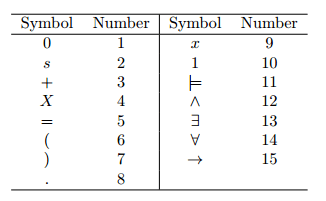
So what had Gödel done? Budiansky’s treatment of Gödel’s proof is light, and I would recommend the 1950s classic “Gödel’s Proof” by Ernest Nagel and James Newman for a semi-popular treatment. Even today Gödel’s seminal paper is comprehensible in its entirety only to specialists in the field. But in a nutshell, what Gödel had found using an ingenious bit of self-referential mapping between numbers and mathematical statements was that any consistent mathematical system that could support the basic axioms of arithmetic as described in Russell and Whitehead’s work would always contain statements that were unprovable. This ingenious scheme included a way of encoding mathematical statements as numbers, allowing numbers to “talk about themselves”. What was worse and even more fascinating was that the axiomatic system of arithmetic would contain statements that were true, but whose truth could not be proven using the axioms of the system – Gödel thus showed that there would always be a statement G in this system which would, like the old Liar’s Paradox, say, “G is unprovable”. If G is true it then becomes unprovable by definition, but if G is false, then it would be provable, thus contradicting itself. Thus, the system would always contain ‘truths’ that are undecidable within the framework of the system. And lest one thought that you could then just expand the system and prove those truths within that new system, Gödel infuriatingly showed that the new system would contain its own unprovable truths, and ad infinitum. This is called the First Incompleteness Theorem.
An example of Gödel’s ingenious technique to transform mathematical symbols – and therefore statements – into numbers. (Source: Math stack exchange)
The Second Incompleteness showed that such a system cannot prove its own consistency, leading to another paradox and in effect saying that any formal system that is interesting enough to prove its own consistency can do so only if it’s inconsistent. This was an even more damning conclusion. Far from getting rid of the paradoxes that Russell and Whitehead believed would be clarified if only one understood the axioms and the deductions from them well enough, Gödel showed that such paradoxes are as foundational a feature of mathematical systems as anything else. As far as Hilbert was concerned, he had uncovered a rotten foundation underlying mathematics that doomed Hilbert’s program forever.
Ironically, just a day after Gödel’s talk, Hilbert gave a speech reinforcing his belief that there would be no ‘ignorabimus’ in mathematics and ending with a famous refrain: “Wir müssen wissen – wir werden wissen.” (“We must know – we will know.”). As sometimes happens when a great mind declares a truth in a scientific discipline with such finality, reactions can range from disbelief and denial to acceptance. Hilbert himself recognized the significance of Gödel’s results but held out hope that they wouldn’t be as far-reaching as they were thought to be. Von Neumann on the other hand is on record saying that after he heard of the incompleteness theorems, he decided to abandon his own productive work in set theory and the foundations of logic and move on to other topics. Gödel’s work had a seismic impact on that of many other thinkers. His proof that a system made up of purely mechanical, axiomatic procedures would contain undecidable propositions inspired Alan Turing’s own answer in the negative to the question of whether a mechanical computer could decide the truth value of an arbitrary proposition in a finite number of steps. Most notably, Gödel’s ingenious scheme of having numbers represent both themselves as well as instructions to specify operations on themselves is, without him ever knowing it, the basis of digital computing.
Thus by the time he was 24 years old, Gödel had established himself as a logician of the first rank and immortalized his name in history. In the next few years his friends and colleagues spread his gospel around the world, most notably in the United States. The noted mathematician Karl Menger was a close friend and was spending a semester in Iowa, sending Gödel periodic letters describing life in America (“Americans as a rule do not go for walks, they think that dashing around in their cars on Sundays is sufficient recreation.”). Not only did Menger give talks about Gödel’s results in the United States, but he performed a crucial service. Helped by a largesse from the brother-sister pair of Louis and Caroline Bamberger who sold their clothing business to Macy’s, the educator Abraham Flexner had established an institute in Princeton dedicated to pure thought, with no administrative and teaching duties. To populate this heavenly tank Flexner had bagged the biggest fish of them all – Albert Einstein. Along with Oswald Veblen, von Neumann and a few others, Einstein became one of the first faculty members at what came to be called the “Institute for Advanced Study”, although given the exorbitant money that Flexner dangled in front of his faculty in addition to the unique work environment, it quickly came to be christened the “Institute for Advanced Salaries”. Menger recommended that Flexner hire Gödel on a temporary basis. He would visit a few more times before permanently relocating in 1940.
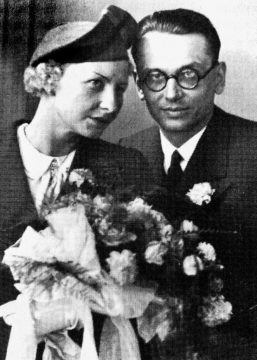
Kurt and Adele at their wedding (Source: Institute for Advanced Study)
By this time, both the personal currents of life and the larger currents of history would steer Gödel’s destiny. In 1927 he had married Adele Porkert, an older woman who lived across from his street. Adele had worked as a nightclub dancer and was a masseuse, qualifications which neither Gödel’s colleagues nor his family considered worthy of his stature. But Adele was to be a true mother to Kurt until her own death. Her role became clear when Gödel started suffering from a kind of psychotic paranoia that would mark him as indelibly as his genius. Starting in the early 1930s, he spent time in sanatoriums, convinced that an apparently weak heart from a bout of rheumatic fever which afflicted him as a child would kill him. More ominously, he started suspecting the sanatorium staff of conspiring to poison him or inject him with lethal substances. He drastically lost weight, and Adele had to feed him food that she had prepared herself to convince him to eat it. In retrospect it is clear that the ultra-logical Gödel also suffered from what we now call obsessive compulsive disorder. He obsessed over his bodily functions, interpreting ordinary signs as signs of trouble – his letters to his mother from America are generously interspersed with accounts of the health of his bowels. Unsurprisingly, this obsession led to a detailed keeping of diaries recording his thoughts and real and perceived symptoms, along with miscellaneous hospital, travel and grocery receipts. It is to Budiansky’s credit that he has combed through these sources to reveal to us the vivid portrait of a methodical, detail-oriented stickler whose very commitment to logic and details would prove to be his undoing.
Political events were also clearly not evolving favorably by the time Gödel first made his way to America. Austrian anti-Semitism had already had a long history, and German-speaking Austrians were fanatically enthusiastic about embracing their former compatriot and army corporal Adolf Hitler. Hitler triumphantly marched into Austria to ecstatic, waving crowds in March 1938 during the Anschluss. But even while Gödel had been proving his famous theorems, the writing had been on the wall. The University of Vienna had been a venue for anti-Semitic demonstrations for a long time, and the Vienna Circle with its Jewish members and commitment to abstract thought and “Jewish science” like relativity was a brightly painted target. In 1936, Johann Nelböck, a mentally troubled former student of Moritz Schlick shot and killed Schlick on the steps of the university, seething under the illusion that Schlick was having an affair with a female student he was obsessed with. Supported by the Nazis and seen as a martyr to the cause of eradicating the foreign element from the body of the Teutonic intellect, Nelböck was sentenced to ten years in prison, only to be promptly released by right-wing authorities in 1938 after the Anschluss. After Schlick’s murder the Vienna Circle effectively dissolved, and with it a glorious intellectual age whose quick demise remains a reminder of how quickly totalitarianism can destroy what takes decades or even centuries to build. After Jewish professors were all dismissed throughout Germany and Austria, Hilbert was asked by the new Nazi minister of education what mathematics was like at the University of Göttingen where he taught. “There is no mathematics anymore at Göttingen”, Hilbert retorted.
Gödel, as involved as he was with the search for mathematical truth, was not finely attuned to what was happening to politics in the country. Two days before Hitler’s takeover of Austria, Menger received a letter about mundane matters of conferences and mathematics from his friend which, as he put it, “may well represent a record for unconcern on the threshold of world-shaking events.” But even Gödel could not ignore what was happening to his colleagues at the university, and after some unpleasant episodes including one in which he was bullied on the streets by Nazi thugs and Adele fended off their taunts with her umbrella, the couple decided to emigrate to America for good. Bureaucratic snafus regarding Gödel’s visa and his new status as a German citizen led to intervention from the director of the Institute for Advanced Study at von Neumann’s goading: that is when von Neumann wrote the remarkable letter urging him to do everything he could to enable Gödel’s emigration, saying that Gödel was absolutely irreplaceable. Because German passengers crossing the Atlantic had to face the dual hazards of Nazi U-boats and potential arrest as enemy aliens by British authorities, Kurt and Adele took the long, scenic route, going through Eastern Europe through Moscow and then taking the Trans-Siberian railroad to Vladivostok, before finally boarding a steamer for San Francisco. Gödel would never leave the Eastern Seaboard of the United States again during his lifetime.
Kurt and Adele arrived in Princeton, a place puckishly described by recent resident Albert Einstein as “a quaint, ceremonial village, full of demigods on stilts”. Gödel had never known Einstein before coming to America, and yet it was Einstein who, along with the Austrian economist Oskar Morgenstern, provided him with the friendship of his Viennese colleagues which he so missed. Einstein and Gödel made for an unlikely pair: the former gregarious, generous, earthy and shabbily dressed, always eyeing the world through a sense of humor; the latter often withdrawn, hyper-logical, critical and unable to lighten up. And yet these exterior differences hid a deep and genuine friendship that went beyond their common background in German culture. Their families often visited each other, and Adele once knitted a woolen vest for Einstein. Animatedly conversing in German during their walks home together, Einstein communed with few others at the institute. It was Einstein who accompanied Gödel and Morgenstern to Gödel’s citizenship ceremony. At the ceremony the overtly pedantic and meticulous Gödel who had studied exhaustively for the citizenship test above and beyond the standard requirements, told the judge that he had found a flaw in the Constitution that would allow the United States to turn into a dictatorship. Einstein and Morgenstern hastily shut him up from saying anything further and the ceremony progressed smoothly.
But the real reason Einstein so admired Gödel was likely because he shared Gödel’s unshakeable belief in the purity of the mathematical constructs governing the universe. Einstein who was not formally religious nevertheless always harbored a deep belief that the laws of physics exist independently of human beings’ abilities to identify and tamper with them – that was one reason he was so uneasy with the then standard interpretation of quantum mechanics which seemed to say that there was no reality independent of observers. Gödel outdid him and went one step further, believing that even numbers and mathematical theorems exist independently of the human mind. It was this almost spiritual and religious belief in the objective nature of mathematical reality that perhaps formed the most intimate bond between the era’s greatest theoretical physicist and its greatest logician. It also helped that Gödel got interested in Einstein’s general theory of relativity, once playing with the equations and startling Einstein by concluding that the theory allowed for the existence of closed timelike curves – in other words, a universe without past and future, without time. For Gödel’s Platonic mind, this kind of result based purely on mathematics and without any physical basis was exactly the kind of absolute mathematical truth he believed in.
Oskar Morgenstern’s friendship with Gödel was even deeper, in part because he outlasted Einstein until Gödel’s own death. Morgenstern who combined worldly wisdom with brilliance in economics had made a name for himself by writing “Theory of Games and Economic Behavior” with von Neumann which established the field of game theory. Morgenstern worried about Gödel’s work, about Gödel’s health and Gödel’s marriage. One of the main sources of Gödel’s life is Morgenstern’s copious, often heartbreaking notes on Gödel’s worries and mental deterioration in his last years. He saw that Adele, while devoted to Kurt, was not a good fit in snobbish Princeton. A young Freeman Dyson vividly described an uncomfortable scene at a party where a very drunk Adele grabbed him and forced him to dance for twenty minutes while Kurt miserably stood by; Dyson could only imagine the horror of their lives. But Adele stayed utterly loyal to Kurt, feeding him, entertaining his paranoid health issues and generally taking good care of him.
After coming to the institute Gödel contributed one significant piece of work that added to the already hallowed place in mathematical history he enjoyed. In his famous 1900 address, the problem Hilbert had put at the top of his list was the so-called Continuum Hypothesis. The hypothesis deals with one of the most startling and deepest aspects of mathematics – a comparison of different kinds of infinity. The fact that there are in fact different kinds of infinity was discovered by Georg Cantor and came as a bombshell. Cantor showed that the “first” kind of infinity, called a countable infinity, was represented by the set of natural numbers. But there was another kind of much larger infinity, an uncountable infinity, represented by the real numbers. It may seem absurd to say that one infinity is larger or smaller than another, but using ingenious arguments Cantor showed that the real numbers cannot have a one-to-one mapping with the natural numbers and are much bigger. The Continuum Hypothesis asked if there is a third kind of infinity between that of the natural numbers and the real numbers.
The problem is still unsolved, but Gödel made a significant dent by showing that the contradiction of the hypothesis could not be proved by standard set theory. This is not the same as showing that the hypothesis is true, but it does result in one strike in favor of it. A bigger advance came in 1963 when mathematician Paul Cohen showed that the hypothesis is independent of standard set theory; that is, either the hypothesis or its negation can be added to standard set theory without destroying its consistency and axioms. For all of Gödel’s scathing remarks and frequent silence about other mathematicians’ work, he was profusely generous toward Cohen when Cohen sent him his proof of the independence of the Continuum Hypothesis, a problem that Gödel himself had tried and failed to solve for more than twenty years.
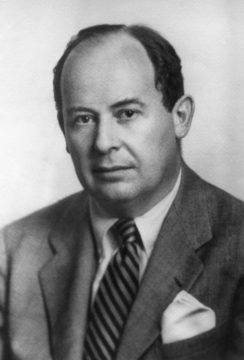
Mathematician John von Neumann was one of Gödel’s biggest supporters (Source: Totally History)
Gödel’s peculiar obsessions and pedantry made him a difficult colleague, and his promotion of to full professor was held up until 1953 because the faculty feared he would be challenging to deal with when it came to the obligatory administrative matters that full professors had to busy themselves with. Once again von Neumann came to his friend’s rescue, asking, “If Gödel cannot call himself Professor, how can the rest of us?” But even after Gödel got promoted his insecurities did not leave him, and he kept on feeling a mixture of self-pity and suspicions of conspiracy on the part of the institute to demote or fire him. He could nonetheless be a very loyal friend and colleague, testifying against having Oppenheimer removed as director for instance after Oppenheimer’s enemy Lewis Strauss tried to oust him after his infamous security hearing. Especially in his later years, young mathematicians like Martin Davis and Hao Wang observed a Gödel who was friendly, curious and funny.
After Einstein’s death in 1955 and von Neumann’s excruciatingly painful death in 1957, Gödel began to increasingly rely on Adele and Morgenstern (as a measure of how startlingly original his mind remained, in March, 1956, as von Neumann was dying, Gödel sent him a letter that is supposed to contain the first statement of a famous problem in computer science, the P=NP hypothesis). His exalted mind often delighted in the simplest of objects, including trinkets and cheap children’s toys bought from convenience stores. The fear that his colleagues had about his obsession evolved, if anything, in the opposite direction: he would meticulously labor over member applications, exhaustively analyzing them and offering suggestions on points others had missed.
But the spark of genius that had lit the mathematical world on fire seemed to have gone missing. In his last few years, Gödel became obsessed with not just believing that there was a conspiracy against him but also one against a hero of his, the 18th century mathematician and polymath Gottfried Wilhelm Leibniz. He became convinced that there was a plot to keep Leibniz’s work hidden from the world. Beginning in the 1970s, he began to see a psychiatrist whose detailed notes Budiansky opens the book with: “Believes he has been declared incompetent and that one day they will realize he is free and take him away…fear of destitution, loss of position at institute because he hasn’t done anything for past year…brought out delusional ideas, including that brother is the evil person behind plot to destroy him…believes he wants to take his wife, house and position at the institute.” Clearly, having his mother and brother Rudi visit him in America, while welcomed initially, had also turned into a plot to take over his world. It didn’t help that by this time Gödel’s work had been popularized enough that he received the Einstein Prize from Einstein himself , the National Medal of Science from President Gerald Ford and that crowning sign of fame – letters from all over the world from fans and crackpots.
There was little that anyone could do to help. In 1977 Morgenstern himself received a diagnosis of terminal cancer and became paralyzed. His tragic last notes and letters indicate the struggle he was facing as Gödel increasingly came to rely on him, phoning him two or three times every day to communicate his latest worries, even as he himself was facing his own mortality. The last straw was when Adele fell sick and had to spend several months in a hospital. After Morgenstern, she had been his last link to the sane world, and in spite of neighbors and colleagues trying to help out, he stopped eating, convinced that he was being poisoned through his food and, unlike in Vienna in the 1930s, not having Adele around to feed him with tender, loving care. When Adele came back the end was already there, and Gödel entered the hospital for the last time. The cause of death was “malnutrition”, although most people believed that slow suicide was the more likely explanation.
How do we deal with the legacy of someone like Gödel? Philosophically, Gödel’s theorems had such a shattering impact on our thinking because, along with two other groundbreaking ideas of 20th century science – Heisenberg’s Uncertainty Principle and quantum indeterminacy – they revealed that human beings’ ability to divine knowledge of the universe had fundamental limitations. But while Heisenberg and the quantum pioneers found limits to understanding rooted in the physical world, Gödel found these limits even in the rarefied world of pure ideas. Nonetheless, mathematics continued to thrive within the boundaries of his theorems, gathering Fields Medals and revolutionizing new fields like algebraic topology and category theory. The deeper significance of Gödel’s work therefore, as he explained in a lecture, is that it’s hard to avoid a connection between them and a Platonic world of numbers and ideas existing independent of our efforts. This is because if human beings are fundamentally incapable of finding out all the results of axiomatic systems, it means there will always be some results outside the grasp of even our most exalted intellects. In our limitations lies mathematics’s freedom.
But that also says something about human minds and points to a debate still raging – whether the mind itself is some kind of Turing machine. The implication of Gödel’s proof is that if the mind is indeed a machine, it will be subject to the incompleteness theorems and there will always be truths beyond our grasp. If on the other hand, the mind is not a machine, it frees it up from being described through purely mechanistic means. Both choices point to a human mind and a world it inhabits that are “decidedly opposed to materialistic philosophy”. Beyond this possible truth is another one that is purely psychological. We can either feel morose in the face of the fundamental limits to knowledge that Gödel revealed, or we can revel, as the historian George Dyson put it, to “celebrate his proof that even the most rigid numerical bureaucracy contains the tools by which higher truth will always be able to effect an escape.”Gödel offers us an invitation to an open world, a world without end.
But what about the paradoxes of the man himself, someone devoted to the highest reaches of rational thought in the most logical of all fields of inquiry, and still one who seemed to have had an almost mystical belief in the spiritual certainty of mathematics and often gave in to the worst impulses of irrationality? I think a clue comes from Gödel’s obsession with Leibniz in his last few years. Leibniz was convinced that this is the best of all possible worlds, because that is the only thing a just God could have created. Like his fellow philosophers and mathematicians, Leibniz was religious and saw no contradictions between science and faith, between teasing out the truths of the world rationally and believing in a hereafter. A few years before his mother Marianne’s death in 1961, Kurt wrote to her in a letter his belief that a God probably exists: “For what kind of sense would there be in bringing forth a creature (man), who has such a broad range of possibilities of his own development and of relationships, and then not allow him to achieve 1/1000 of it?” Like his fellow philosopher Leibniz, Kurt Gödel could perfectly reconcile the rational and the transcendental. In doing this, he proved himself to be much more at home in the 18th century than the 20th. Perhaps that vision of a reconciliation between rational thought and seemingly irrational human frailty and belief will be, even more than his seminal mathematical discoveries, his enduring legacy.
That John von Neumann was one of the supreme intellects humanity has produced should be a statement beyond dispute. Both the lightning fast speed of his mind and the astonishing range of fields he made seminal contributions to made him a legend in his own lifetime. When he died in 1957 at the young age of 56 it was a huge loss; the loss of a great mathematician, a great polymath and to many, a great patriotic American who had done much to improve his country's advantage in cutting-edge weaponry. Starting with pure mathematics - set and measure theory, rings of operators, foundations of mathematics in the 1920s and early 30s - von Neumann moved to other mathematical topics like ergodic theory, Hilbert spaces and the foundations of quantum mechanics that were closer to physics. He then moved into economics, writing "The Theory of Games and Economic Behavior" with Oskar Morgenstern which laid the foundations of game theory (a first edition in good condition now sells for $12,500). During and after the war von Neumann became an almost completely applied mathematician and physicist. Perhaps the major reason for this transformation was his introduction to computing during a consulting stint in England during the war in 1943. Even as nuclear weapons promised to completely change politics, science and international relations, he was writing in a letter to a friend at the end of the war, "I am thinking about something much more important than bombs; I am thinking about computers." In another puckish letter that indicated his move away from his traditional domain of pure mathematics, he said he was coming back from England a "better and impurer man".
During the war, Von Neumann played a key role in developing the idea of implosion used in the plutonium bomb developed in the Manhattan Project. He visited Los Alamos as a consultant from 1943 onwards until the end of the war and specifically lent his expertise to the "lenses" in the plutonium bomb that focused a converging shock wave triggered by explosives that set off the fission reaction. These contributions were based on the valuable experience he had gained consulting on ballistics, shaped charges and shock waves at the Aberdeen Proving Ground in Maryland. During and after the war he turned his powerful mind to all kinds of defense-related research and became a major voice in the development of the hydrogen bomb and ICBMs; at one point he advised every US defense agency except the Coast Guard.
To the lay public and to engineers, von Neumann might be best known as one of the founders of modern computing, his name made ubiquitous through the von Neumann architecture of computers that is taught to undergraduates in computer science and engineering. Interestingly, it is this distinction that is somewhat controversial and also much more interesting than it seems from a naive analysis. On both sides one sometimes sees extreme opinions tossed about, so it's worth laying some of them to rest right away. Von Neumann did not "invent" the computer or computer science; the history of computing goes back much farther all the way to medieval times. He also did not "invent" the stored program computer concept, neither did he invent most of the major computing concepts that we now take for granted, like RAM and flow control. He did not invent any important technical bit of hardware. But as William Aspray surmises in his excellent and detailed, albeit a bit staid and dry book, von Neumann's true influence was far more subtle and in fact ironically goes even further than what his defenders imply. I am not sure even Aspray does a convincing job emphasizing how far it went. Therefore, while I will not embark on a detailed chapter-by-chapter analysis of the book here, what I want to do is drive home the two most important concepts that emerge when we analyze von Neumann's role in the history of modern computing - the value of generalists and the power of abstraction. An accidental introduction to computing Von Neumann became introduced to computers in large part by accident. An important part of the introduction came from the "computers" - usually women calculators in an assembly line kind of system performing repetitive calculations - who were used to do bomb calculations at Los Alamos. The bomb calculations particularly drove home to him the importance of non-linear phenomena involved in the complex radiation flow and hydrodynamics of a nuclear explosion, phenomena that were very hard to model by hand. Another introduction came from meeting scientists in England like Alan Turing and the engineers who were building some of the first computers in Manchester and other places. Von Neumann had also seen the value of computing tables in his work on ballistics at the Aberdeen Proving Ground in Maryland. All these experiences drove home to him the importance of computational science in general. But perhaps the most important event that introduced von Neumann to computing was a chance encounter at a railway station in the summer of 1944 with Herman Goldstine, an engineer who had been working on the ENIAC computer at the University of Pennsylvania. Until then von Neumann did not know about this pioneering work that was the first important computer project in the country. The ENIAC was not a true stored program computer, so the cables and connections had to be laboriously rewired to solve every new problem, but by the standards of the times it was quite advanced and is now considered the first general-purpose computer, able to tackle a variety of problems. Unlike past analog computers which used electromechanical relays, the ENIAC used vacuum tubes which importantly made it a digital computer and a forerunner of modern computers. The ENIAC had been a labor of love and had been built by engineers whose names are sadly not as appreciated as von Neumann's but should be; along with Goldstine, Julian Bigelow, J. Presper Eckart and John Mauchly played foundational roles in its design and construction. The importance of von Neumann's influence At this point it's sensible to say a word about the state of what was then computer science. As a field it was generally looked down upon by mathematicians and physicists and regarded as being the domain of drudge work. This is where the first of von Neumann's contributions came into play: his sheer influence whose role cannot be underestimated. By the 1940s he was already considered one of the world's greatest mathematicians and polymaths, and his work in mathematics, physics and economics all commanded the highest respect. In addition, the sheer speed of his thinking that left even Nobel Laureates feeling stumped contributed to a kind of godlike perception of his abilities; later Enrico Fermi once said that von Neumann made him feel like he knew no mathematics at all, and Hans Bethe once mused whether von Neumann's mind indicated a higher species of human being. Von Neumann was also becoming a very valuable asset to the US government. All this meant that when von Neumann said something, you listened. People who question his importance to modern computing sometimes don't appreciate that "importance" in a field is a combination of originality and influence. In terms of influence there was none who surpassed von Neumann, so whatever he said about computing was often taken seriously simply because he had said it. Von Neumann the generalist The reason von Neumann immediately became so influential in the ENIAC project attested to one of his signal qualities - his remarkable ability to quickly grasp a new field of inquiry and then to leapfrog over even the field's founders to divine new results and insights. It was also a source of annoyance to some since it meant that von Neumann could take their ideas and immediately run farther with them than they themselves could. More than anyone else von Neumann could take the complete measure of a field, a thirty thousand foot view if you will. This is where an even more important quality of his came into play - the polymath's ability to be a generalist. Most people who worked in computing then came from narrowly defined fields: the mathematicians didn't know much about engineering, and the engineers who specialized in vacuum tubes and electronics had little idea of the mathematical theory behind computing. Von Neumann was unique in having total command of all of mathematics and a good part of physics, and his work at Aberdeen and Los Alamos had also introduced him to key ideas in engineering. The missing link was the engineering work on the ENIAC, and when he understood this work, his generalist's mind quickly connected all the dots. Von Neumann and the power of abstraction Two other very important facts contributed to making von Neumann unique, and both of them shed light not just on his mind but on the power of abstraction. One was a reading of Alan Turing's famous 1936 paper on Turing machines that led the foundations of theoretical computer science. This was again a paper which would not have been read by engineers. When Turing visited Princeton during the war von Neumann tried to recruit him as his assistant but Turing instead chose to go back and become a key part of the government's cryptographic effort in breaking the German codes. But Turing's paper proved very influential and in fact von Neumann asked all the engineers working on the ENIAC and later on the Institute for Advanced Study computer to read it. The second paper that was a major influence on von Neumann was a 1943 paper by Walter Pitts and Warren McCullough that was the first computational model of a neuron and the forerunner of today's neural networks. Von Neumann immediately grasped the similarity between the Pitts-McCullough paper and the basis of computing. Again, this would not be work familiar to engineers or even other mathematicians interested in computing, and it was only von Neumann's unique interests and abilities as a polymath that led him to read and appreciate it, and to especially appreciate the value of treating neurons and computational elements in general as generalized black boxes. Both the Turing and the Pitts-McCullough paper led von Neumann to achieve something that was actually unique and can be stamped with his name on it. This something is a signature quality of mathematics and to some extent computer science, and it's what really makes those two fields the powerful fields they have become. The signature quality is the power of abstraction. The beauty and strength of mathematics is that it can generalize from specific instances (or instantiations, as computer scientists like to say) to universal abstract frameworks. Physics also shares this power to a considerable extent - for instance, the equation F=ma is independent of its specific instances and can equally describe an apple falling to the earth, a planet revolving around the sun and two black holes colliding. But the language the equation is expressed in is mathematics, and it is mathematics that allows us to generalize in the first place. Von Neumann's big achievement was in being able to move away from vacuum tubes, wires, punch cards and magnetic core memory to a high-level view of computing that also led him to see parallels with the human brain. Basically this view told him that any computational framework - biological or electronic - must have five basic components: an input, an output, an arithmetic unit, a processing unit that manipulates data and a memory that stores data. Crucially, it also told him that both the instructions for doing something and the thing that is done can be stored in the same place and in the same form. In the words of the historian George Dyson, von Neumann's insights "erased the distinction between numbers that mean something and numbers that do something." The stored program was not invented by von Neumann, but this abstract view of the stored program did come from him, again thanks to his powers as a pure mathematician and generalist. These two signal insights are the basis of today's von Neumann architecture, but the key idea enabling them was an abstracted view that led von Neumann to visualize the structure of the computer in a most general form, something that his specialized contemporaries could not do. A slight digression on this idea of the power of abstraction since it's relevant to my own job. I am involved with a company which is trying to enable scientists to run experiments in biology and chemistry remotely in a "cloud lab" from the luxury of their homes and laptops. A key idea in doing this is to abstract away the gory details of all the hardware and equipment through a software platform that only exposes high-level functionality to scientists who aren't experts in engineering. But an even more desirable goal is to generalize workflows across biology and chemistry so that instead of thinking of protocols specific to biology or chemistry, scientists will only think of generic protocols and generic sequences of steps like "move liquid", "stir" and "heat/cool". This is possible because at an abstract level, a container holding cells and a container holding a chemical compound for instance are both the same from the point of view of software - they are objects on which you need to perform some operation. At an even more abstract level, they are binary bits of code which change into other binary bits of code; at this level, the words "biology" and "chemistry" become irrelevant. The ultimate goal is thus to do away with the distinction between specific instantiations of operations in specific fields and abstract them away into generalized operations. I would like to think Johnny would have appreciated this. First Draft of a Report on the EDVAC (1945) The result of this generalist knowledge was a seminal report called First Draft of a Report on the EDVAC that von Neumann wrote and circulated in 1945 and 1946. The EDVAC was supposed to be the ENIAC's successor and a true stored program computer. The report laid out in detail what we know as the von Neumann architecture and also explained key concepts like flow control, sub-routines and memory implementation. Von Neumann was especially big on subroutines since they went a long way in enabling instantaneous access of specific instructions that would enable stored program computing. He also emphasized the importance of random access memory; the first random access memory hardware was the Williams tube, invented in 1946. The EDVAC report has become controversial because of two reasons. Firstly, while it came out of many discussions that von Neumann had with the ENIAC engineers, especially Eckert and Mauchly, it had only von Neumann's name on it. Secondly, the report led to a bitter patent dispute. Eckert and Mauchly wanted to start their own company designing computers based on patenting the work on the ENIAC. But after von Neumann circulated the report in public the knowledge was in the public domain and therefore the patent issue became moot. Eckert and Mauchly were understandably bitter about this, but we have to credit von Neumann for being an early proponent of open-source software; he wanted concepts from computing to be available to everyone. Appropriately enough, the EDVAC report became widely known to engineers and scientists across the United States and Europe and influenced the design of computers in many countries. It cemented von Neumann's reputation as one of the founders of modern computing, but it should always be remembered that while the generalist insights in that report came from von Neumann, they were based on a lot of specific engineering and design work done by others. Two early applications: Non-linear equations and meteorology After working on the ENIAC and the EDVAC, von Neumann decided to apply all the knowledge and insights he had gained to building a computer at the Institute for Advanced Study (IAS) in Princeton where he had been a member since 1933. This fascinating story has been told extremely well by George Dyson in his marvelous book "Turing's Cathedral" so it's not worth repeating here. But it is worth noting what von Neumann considered the two most important applications he envisaged for the first computers. The first was the solution of non-linear equations. Von Neumann had become quite familiar with non-linear equations in the analysis of the complex hydrodynamics and radiation flow associated with nuclear explosions. He knew that non-linear equations are very hard to solve using traditional methods - while analytical solutions are often impossible, even numerical ones might be challenging - and realized that the iterative and fast techniques computers used would greatly aid the solution of these methods. Many of the early papers authored by von Neumann, Goldstine and Bigelow describe mathematical problems like the diagonalization of large matrices and the solution of non-linear partial differential equations. This early work drove home the great advantage and power of computing in a wide variety of fields where non-linear equations are important. Von Neumann also realized that the atmosphere with its complex movements of air and water is a perfect example of non-linear phenomena. Events during the war like the Normandy landings had emphasized the importance of understanding the weather; von Neumann now thought that the computer would be the ideal tool for weather simulation. Most of the work in this area was done by scientists like Jule Charney and Carl-Gustaf Rossby, but von Neumann played a very influential role by co-authoring papers with them, organizing conferences, securing funding and generally spreading the word. His stature and eminence again went far in convincing the scientific community to work on applying computers to meteorology. Von Neumann also thought that controlling the weather would be easy, but this has proved to be a harder goal, partly became of the complexity of the phenomena involved (including chaos)and partly because of political reasons. Von Neumann's role as a founder of modern computer science The Institute for Advanced Study computer had a memory of 5 kilobytes, less than what it takes to display a single pixel today. And yet it achieved remarkable feats, simulating the workings of a hydrogen bomb (secretly, at night), simulating the weather and modeling the genetic growth of populations. It embodied all of von Neumann's salient concepts and was widely emulated around the country. The navy built a computer based on the IAS machine, and so did IBM and the RAND corporation whose machine was playfully named the JOHNNIAC. From these machines the gospel spread wide and hard. In his last few years von Neumann became even more interested in the parallels between the brain and the computer. His last major contribution was to come up with a detailed theory of self-reproducing automata which presaged important later developments in molecular biology and nanotechnology; a 1948 set of lectures at Caltech by him lays out components of self-reproducing organisms with error correction that are remarkably similar to the DNA, RNA ribosomes , proof-reading enzymes and other genetic components that were later discovered. Once again, what made von Neumann's insights in this area possible was that he thought about these components in the most general, most abstract manner, without waiting for the biologists to catch up. In the 1950s he planned to move away from the IAS to either UCLA or MIT where his interests in computing would find a better home and would be encouraged and funded. The history of science and technology could have been very different had this come to pass. Unfortunately this did not come to pass. In 1956 von Neumann was diagnosed with cancer, and he passed away after a cruel and protracted illness in February 1957. Notes for a set of lectures later published as a book lay on his deathbed. So was von Neumann one of the founders of modern computer science? As complicated, subtle and important as the details are, the overall answer has to be yes. This answer has little to do with his technical contributions and all to do with his sheer influence and his power of generalization and abstraction. Von Neumann communicated the power of computers at a time when they were regarded as little more than turn-the-crank calculators. Because of his enormously wide-ranging interests he demonstrated their potential applications to a vast number of fields in pure and applied mathematics, meteorology, physics and biology. Most importantly, he came up with general ideas that serve as the foundation of so much computing that we take for granted today. In other words, von Neumann more than anyone else made computing respectable, widely known and the basis of modern life that everyone critically relies on today. He is not the founder of computer science or the "inventor of the computer", but certainly one of the principal founders. And he achieved this status largely because of the advantage enjoyed by generalists over specialists and the power of abstraction, both good lessons for an age when specialization seems to be the norm.
Mathematics and music have a pristine, otherworldly beauty that is very unlike that found in other human endeavors. Both of them seem to exhibit an internal structure, a unique concatenation of qualities that lives in a world of their own, independent of their creators. But mathematics might be so completely unique in this regard that its practitioners have seriously questioned whether mathematical facts, axioms and theorems may not simply exist on their own, simply waiting to be discovered rather than invented. Arthur Rubinstein and Andre Previn’s performance of Chopin’s second piano concerto sends unadulterated jolts of pleasure through my mind every time I listen to it, but I don’t for a moment doubt that those notes would not exist were it not for the existence of Chopin, Rubinstein and Previn. I am not sure I could say the same about Euler’s beautiful identity connecting three of the most fundamental constants in math and nature – e, pi and i. That succinct arrangement of symbols seems to simply be, waiting for Euler to chance upon it, the way a constellation of stars has waited for billions of years for an astronomer to find it.
The beauty of music and mathematics is that anyone can catch a glimpse of this timelessness of ideas, and even someone untrained in these fields can appreciate the basics. The most shattering intellectual moment of my life was when, in my last year of high school, I read in George Gamow’s “One, Two, Three, Infinity” about the fact that different infinities can actually be compared. Until then the whole concept of infinity had been a single concept to me, like the color red. The question of whether one infinity could be “larger” than another sounded as preposterous to me as whether one kind of red was better than another. But here was the story of an entire superstructure of infinities which could be compared, studied and taken apart, and whose very existence raised one of the most famous, and still unsolved, problems in math – the Continuum Hypothesis. The day I read about this fact in Gamow’s book, something changed in my mind; I got the feeling that some small combination of neuronal gears permanently shifted, altering forever a part of my perspective on the world.
Anyone who has seriously studied mathematics for any extended period of time also knows the complete immersion that can come with this study. In my second year of college I saw a copy of George F. Simmons’s book “Introduction to Topology and Modern Analysis” at the house of a mathematically gifted friend and asked to borrow it out of sheer curiosity. Until then mathematics had mainly been a matter of utilitarian value to me and most of my formal studies had been grounded in the kind of practical, calculus-based math that are required for solving problems in chemistry and physics. But Gamow’s exposition of countable and uncountable infinities had whetted my mind for more abstract stuff. The greatest strength of Simmons’s book is that it is entirely self-contained, starting with the bare basics of set theory and building up gradually. It’s also marvelously succinct, almost austere in the brevity of its proofs.
The book swept me off my feet, and the first time I started on it I worked through the theorems and problems right through the night; I can still see myself sitting at the table, the halo of a glaringly bright table lamp enclosing me in this special world of mathematical ideas, my grandmother sleeping outside this world in the small room that the two of us shared. The next night was not much different. After that I was seized by an intense desire to understand the fundamentals of topology – compactness, connectedness, metric and topological spaces, the Heine-Borel theorem, the whole works. Topology seemed to me like a cathedral – in fact the very word “spaces” as in “vector spaces” or “topological spaces” conjured up (and still do) an intricate, self-reinforcing cathedral of axioms, corollaries, lemmas and theorems resting on certain rules, each elegantly supporting the rest of it, being gradually built – or perhaps discovered – through the ages by its great practitioners, practitioners like Cantor, Riemann, Hilbert and Banach. It appeared like a great machine with perfectly enmeshed gears flawlessly fitting into each other and enabling great feats of mechanical efficiency and beauty. I was fortunate to find an enthusiastic professor who trained students for the mathematical olympiad, and he started spending several hours with me every week explaining proofs and helping me get over roadblocks. This was followed by many evenings of study and discussion, partly with a like-minded friend who had been inspired to get his own copy of Simmons’s book. I kept up the routine for several months and got as far as the Stone-Weierstrass theorem before other engagements intruded on my time – I wasn’t majoring in mathematics after all. But the intellectual experience had been memorable, unforgettable.
If even a lowly non-mathematician like myself could be so taken by the intricacies of higher mathematics, I can only dimly imagine the reveries experience by some of math’s greatest practitioners, one of whom is Shing-Tung Yau. Yau is a professor at Harvard and one of the world’s greatest mathematicians. His speciality is geometry and topology. Yau’s claim to fame is in bridging geometry and topology with differential equations, essentially founding the discipline of geometric analysis, although perhaps his greatest legacy would be forming novel, startling connections between physics and mathematics and opening up a dialogue that has had a long and often contentious history. For these efforts he won the Fields Medal in 1982, becoming the first mathematician of Chinese descent to do so.
The connection between algebra and geometry is an ancient one. In creating analytical or Cartesian geometry for instance, Rene Descartes had found a way to represent the elements of Euclidean geometry, entities like points and lines, as algebraic coordinates. This was a revolutionary discovery, allowing basic geometric entities like circles and ellipses to be described by algebraic equations. Analytical geometry lies at the very foundation of mathematics, enabling many other fields like multivariate calculus and linear algebra. The culmination of analytical geometry was in the field of differential geometry which uses techniques from algebra and calculus to describe geometric objects, especially curved ones.
The difference between geometry and topology is essentially that the former is about local entities while the latter is about global entities, about the big picture. Thus, in the context of the analogy often given to illustrate what topology is about, while a coffee cup and a donut are different geometric objects, they are identical topological objects because one can be converted into the other simply by stretching, expanding and contracting, without having to tear or cut any part. Perhaps Yau’s most interesting contributions to differential topology would be something called a Calabi-Yau manifold. Loosely speaking, a manifold is a topological space whose every point is essentially “flat” or “locally Euclidean”. A good analogy is with ancient views of the Earth as flat contrasted with modern views of a round earth; the discrepancy arises from the fact that even the round earth is locally flat or Euclidean. Manifolds are not just interesting mathematically but are of great importance in physics and especially in general relativity. For instance, Einstein used the theory of Riemannian manifolds to deal with the curvature of spacetime. Calabi-Yau manifolds are special manifolds that gained importance when they were found to represent “hidden” dimensions in string theory. But this is merely one of Yau’s many seminal contributions to math over a long and fascinating life as described in his memoirs, “The Shape of A Life“.
That life started in China in the 1950s, during the cultural revolution. Yau was one of nine children. His parents were both very intelligent and highly committed to the education of their children. His father in particular was a scholarly role model for Yau. He was a professor who taught many disciplines, including languages and history. He was well versed in poetry and philosophy and always had a ready store of Taoisms and Confucian parables for his children. Shing-Tung’s parents lost most of their property during the revolution, and like many others migrated to Hong Kong where a better life was found. This better life was still very hard. Yau’s parents moved several times, and most houses he lived in were either overcrowded or in the wilderness, without running electricity and water, sometimes infested by snakes and other animals. School was several miles away and had to be reached through a combination of walks and public transportation. And yet it seems to have been a generally happy childhood, sustained by stories and playmates in the form of several brothers and sisters, of whom Yau was especially close to a particular older sister. The poverty and hardscrabble life also engendered a tremendous capacity for persistence and hard work in Yau. This capacity was particularly enhanced after Yau’s father tragically passed away from cancer when he was fourteen. Yau was devastated by his amazing father’s passing, and he resolved to apply the lessons this role model had imparted as diligently as possible. His mother was a tremendous influence, and she worked at odd jobs to support her large family. Later she moved to the United States with her son and had the pleasure of watching him become successful beyond her dreams.
While not particularly prodigious in mathematics in his early years, Yau started shining in high school. By a quirk of fate in which he did less than ideally in a national examination by spending time with a street gang, Yau gained admission to a school named Pui Ching that remarkably enough produced no less than one future Nobel laureate, three future U.S. National Medal of Science winners and eight future members of the U.S. National Academy of Sciences. This is an astonishing record for a fairly provincial school in Hong Kong, similar to records of future eminent scientists from the Bronx High School of Science of New York City. One factor that played into the school’s success as well as that of the Chinese University of Hong Kong which Yau attended for college was the presence of visiting American professors or native-born professors who had studied at American universities. One such professor named Stephen Salaff recommended Yau for graduate school at the University of California in Berkeley, and Yau’s career was launched. A decisive factor in Yau’s admission was a strong recommendation by S. S. Chern, Berkeley’s eminent geometer and perhaps the leading Chinese mathematician outside the United States then. Chern’s relationship with Yau looms large in the book, perhaps too large, and throughout his life Chern was both father figure and mentor to Yau as well as nemesis and adversary. Here Yau also met his wife Yu-Yun, an accomplished physicist; curiously enough, in deference to Chinese traditional culture, while he saw her during his first week in the library, he waited several years to ask her out before someone made a formal introduction. The two also lived apart for several years while Yau, uncommonly for a mathematician, bounced between many universities like Stanford, the Institute for Advanced Study in Princeton and UCSD before finally settling down at Harvard. Their two sons are successful in their own regard, one being a biochemist and the other a doctor.
After graduating Yau made a variety of significant contributions to differential geometry and geometric analysis. This included proving the Calabi conjecture which entails proving the existence of Riemannian metrics with certain properties on complex manifolds. This was a years-lone struggle emblematic of great mathematical achievements, and like great mathematical achievements it involved some blind detours, including Yau’s mistaken early results that seemed to indicate counterexamples to the conjecture. A particularly key contribution by Yau of great relevance to physics was to come up with a purely mathematical proof of the so-called positive mass conjecture. This conjecture, taken at face value as obvious by physicists for a long time, said that the mass of any physical isolated system from both matter and gravitation is positive. This includes our universe. To prove this, Yau and his collaborator Richard Schoen constructed an ingenious argument: they first proved that if the average curvature of the spacetime corresponding to such a system is positive, then the mass is also positive. They then constructed a spacetime with positive curvature that had the same mass as our universe. Put together, the two results which showcased a classic argument by analogy showed that the mass of our universe must also be positive.
Yau and Schoen’s results inaugurated a new era of interaction between physics and mathematics. This relationship although long and profound had often been fraught; David Hilbert once famously said when asked if the relationship was bad that it wasn’t bad because for it to be so the two groups have to talk to each other. Most of the breakthroughs in twentieth century physics were made using what we might call 19th century mathematics – calculus, differential equations and matrix theory. Yau and others’ work showed that there were still novel approaches from pure math based on topology and geometry that could contribute to advances in physics. Roger Penrose who was trained in the classical tradition of British mathematics imbibed these fields, and he was able to use insights from them to make groundbreaking contributions to general relativity.
This line of discovery especially took off when physicists working on string theory in the 1980s discovered that the hidden dimensions postulated by string theory could essentially be modeled as Calabi-Yau manifolds. This was indeed one of those happy circumstances where a purely mathematical discovery made out of intellectual curiosity could have deep ramifications for physics. There are also examples from string theory that have spurred developments in pure mathematics. There was again precedent for such unexpected relationships – for instance the theory of Lie groups turned out to have completely unexpected connections with particle physics – but Yau and others’ work showed the great value of pure curiosity-driven research in mathematics that could spark a robust back and forth with physics. One aspect of string theory that is missing from Yau’s account is the increasing criticism of the field as being unmoored from experiment or even from experimental prediction. But notwithstanding this valid criticism, it is clear that string theory provides a great example of how, just like mathematics has traditionally contributed to physics, discoveries in physics can play back into pure mathematics.
Along with straddling the worlds of math and physics, Yau has also straddled two others worlds – those of China and the United States. Although he grew up in Hong Kong, his parents’ strong Chinese roots made him feel very strong connections to his ancestral homeland. He visited China several times a year, handpicked Chinese students to study in the US and collaborated extensively with Chinese researchers; in fact almost two-thirds of his students and collaborators are Chinese, and in what was a harbinger of current times, the CIA asked him about his students multiple times before realizing that their work was too obscure and pure to impact national security – one of the unexpected ancillary perks of working in pure mathematics. He also criticizes the Chinese system as being too enamored of prizes, money and fame rather than the pure intellectual satisfaction that comes from pursuing science for its own goals. After he won the Fields Medal, Yau’s Chinese sojourns became high profile and they got him into many controversies involving funding, favoritism and committee work, many involving his former mentor Chern. At least a dozen personal controversies dot the narrative in the book, and while they make for fascinating reading because they demonstrate that even the most abstract of mathematics is not free from the very human qualities of personal jealousies, feuds, nepotism and claims of credit, methinks that Yau sometimes doth protest too much, especially since we only hear one side of the story and seldom the other side.
Perhaps the most significant controversy came about when Sylvia Nasar who wrote the book “A Beautiful Mind” wrote in a widely read article in the New Yorker that Yau had tried, through his students, to steal credit away from the famously reclusive Russian mathematician Grigori Perelman and his stunning, completely unexpected proof of the century-old Poincare Conjecture. It turned out that Perelman had not worked out all the details of his proof and had built on the very important work done by the American mathematician Richard Hamilton. Yau recognized that Perelman’s results would have been impossible without Hamilton’s work, and went out of his way to praise Hamilton. He also recruited two Chinese students to work out a mammoth, 300-page exposition of the proof that filled in some gaps. There is no doubt that the proof was Perelman’s, but Yau’s extensive maneuverings made it sound like he was undermining Perelman’s efforts. In this case, because of Perelman’s self-imposed isolation from the community, it is easy to think that Yau deserves the criticisms, but he makes his side of the story clear and one gets the feeling that Nasar exaggerated the feud. And in spite of all these controversies, Yau has sustained warm friendships with many leading mathematicians.
Shing-Tung Yau’s life has been wholly dedicated to mathematics and its advancement. He sees mathematics much like Newton saw all of natural science:
“After much tumult in my early years, I was able to find my way to the field of mathematics, which still has the power to sweep me off my feet like a surging river. I’ve had the opportunity to travel upon this river – at times even clearing an obstruction or two from a small tributary so that water can flow to new places that have never been accessed before. I plan to continue my explorations a bit more and then, perhaps, do some observing – or cheerleading – from the riverbanks, a few steps removed.”
A little boy on the shore, playing with shiny pebbles, while the great ocean of truth lies undiscovered before him, ready to be explored.